Pages

Wednesday, July 31, 2013

SPEAKING OUT ABOUT MENTAL ILLNESS...

Well, it's official: Congress is not doing more for the mentally ill because its members don't want to be "stigmatized" for helping the mentally ill. At least that's one version of the story and it's coming from a former member of Congress - Patrick Kennedy, the Representative from Rhode Island's first district, until 2011. The son of Joan and Ted Kennedy demonstrates what it means to be an advocate when he is seen and heard STEPPINGFORWARD2DAY!

His poignant remarks during a recent interview are worth hearing. Patrick Kennedy, like millions of caregivers of relatives diagnosed or undiagnosed with a biological condition affecting either moods or thinking... is authentic; he speaks from experience. Be sure to step forward with your own comments and observations about why our legislators are not doing more for the mentally ill.

Here's the full Yahoo! interview where the former Congressman says Congress is stigmatized by the stigma of mental illness.  WOW!!!  Just click on link below.

Patrick Kennedy: Members of Congress battle mental illness in their families but vote against help


AND... Patrick Kennedy didn't just start talking about mental illness. In this interview for the American Psychiatric Association on July 19, 2013, the former Congressman shows he has been fighting for parity in health care for some time.

Tuesday, July 23, 2013

Helping the Mentally Ill...

Sometimes it seems the only way to get help for a loved one you suspect of  having mental health issues is unfortunately via the criminal judicial system.  In other words, until the person is arrested for some crime, it may be difficult to get a diagnosis or get the person to willingly submit to treatment, even with a diagnosis. Most of us are against forcing an individual to take medicine but what do you do when a person’s brain is the problem and wants to maintain the status quo and, hence, no medicine is welcomed even if it might help the person to heal.  That’s an ongoing dilemma.
Former Nickelodeon star Amanda Bynes is finally going to get some psychiatric help after months of acting out in ways that raised question about whether she is in her “right mind.”
amanda bynes
On Monday, July 22, 2013 around 9 pm she was detained for a mental health evaluation after setting a fire in a stranger’s driveway in her California community. She’s now being held for 72 hours on what’s called a 5150 psychiatric hold. It’s involuntary and will legally allow a mental evaluation.  According to the Channel 2 CBS station in Los Angeles:

AMANDA BYNES PLACED ON 5150 HOLD AFTER DISTURBANCE AT THOUSAND OAKS HOME

THOUSAND OAKS (CBSLA.com) — Actress Amanda Bynes was involuntarily hospitalized late Monday for a mental evaluation after authorities received a disturbance call at a Ventura County home.
Local fire and sheriff’s departments responded to a residence in the 200 block of Avenida De Los Arboles around 8:45 p.m., authorities said.
When authorities arrived, they found the 27-year-old, who is a native of the area, outside the house.
“Deputies investigated the incident and determined that she met the criteria of 5150 W&I (California Welfare & Institutions Code),” Cpt. Don Aguilar said. “She was detained and taken for a mental health evaluation.”
“There’s been no charges at this time or crime in reference to this incident,” Cpt. Aguilar told KNX 1070.
Monday’s episode was not Bynes’ first run-in with the law.

On May 23, she was arrested for allegedly throwing a bong out of her New York City apartment window. She has been charged with reckless endangerment and attempted tampering with physical evidence.
Her next court appearance was scheduled for Sept. 26.
###
AND there's more... on May 25th, after another incident AND obviously more cries for help... members of the media, including TMZ, began saying Bynes wasn’t crazy enough  to be evaluated for “craziness.”   http://www.tmz.com/2013/05/25/amanda-bynes-not-certifiable-5150-mental-illness-conservatorship/

AMANDA BYNES NOT CERTIFIABLE AND IT’S A BIG PROBLEM

EXCLUSIVE
0509_amanda_bynes_getty_article2
Amanda Bynes is not 5150 material, meaning she can’t be picked up against her will and held for mental evaluation, at least not yet … this according to multiple sources familiar with the situation.Our sources tell us Amanda has not been diagnosed with any mental illness.  Sources say her parents are worried there are signs she might be bipolar or schizophrenic, but Amanda has been unwilling to undergo psychiatric testing.
We’re told her parents would like to create an involuntary conservatorship, similar to Britney Spears, but Amanda’s conduct is not so over the line that a judge would take away her freedom.  
Ditto for a 5150 psychiatric hold, which would allow authorities to put Amanda in a mental facility against her will for 72 hours for mental evaluation.  We’re told authorities just don’t have the goods.  In fact, Amanda was taken to a hospital after her arrest Thursday night and the shrinks didn’t think an involuntary hold was warranted.
There’s one other option to get a diagnosis. If Amanda is so out of it she can’t understand the nature of the criminal cases that have been filed against her … a judge can halt the proceedings and order a psychiatric evaluation.  Amanda has been involved in 3 criminal cases in California recently, and there was NO effort to go this route.  That’s because she has always been lucid in court.  (TMZ  5/25/2013)

So even though Amanda’s behavior was increasingly “strange” both on and off her twitter account – from wearing blue wigs to court to being threatened with eviction for smoking “weed” in a non-smoking exclusive NY  apartment building…  there’s apparently been a feeling that there’s nothing her parents or others could do about it.
Well, there is... but no one has used the Treatment Advocacy Center's AOT strategy or the NAMI-supported ACT in Bynes case.  TAC's ASSISTED OUTPATIENT TREATMENT (AOT) plan permits court-ordered involuntary treatment of a mental illness while the National Alliance on Mental Illness (NAMI) advocates for an ASSERTIVE COMMUNITY TREATMENT (ACT) which requires the support of “the consumer” or mentally ill person.
Either way, and in spite of controversy involving each, the goal is similar:  keep people with mental illness from becoming criminals in order to receive treatment.  Advocates on both sides of the issues are encouraged to actively engaged in mental health care reform debates.
Thus... Amanda Bynes‘ actions are important because, like other celebrities, they are a wake-up call that more, not less, is needed, not only for those with compromised brains, but for the caregivers and loved ones of relatives struggling with mental health issues.  How can a civilized society ignore such cries for help???
                   amanda-bynes-5150.jpg                   amanda bynes 5150                amanda-bynes-5150-metal-health.jpg?itok=TEyNa4tc

Friday, June 7, 2013

Mental Illness in the Movies...

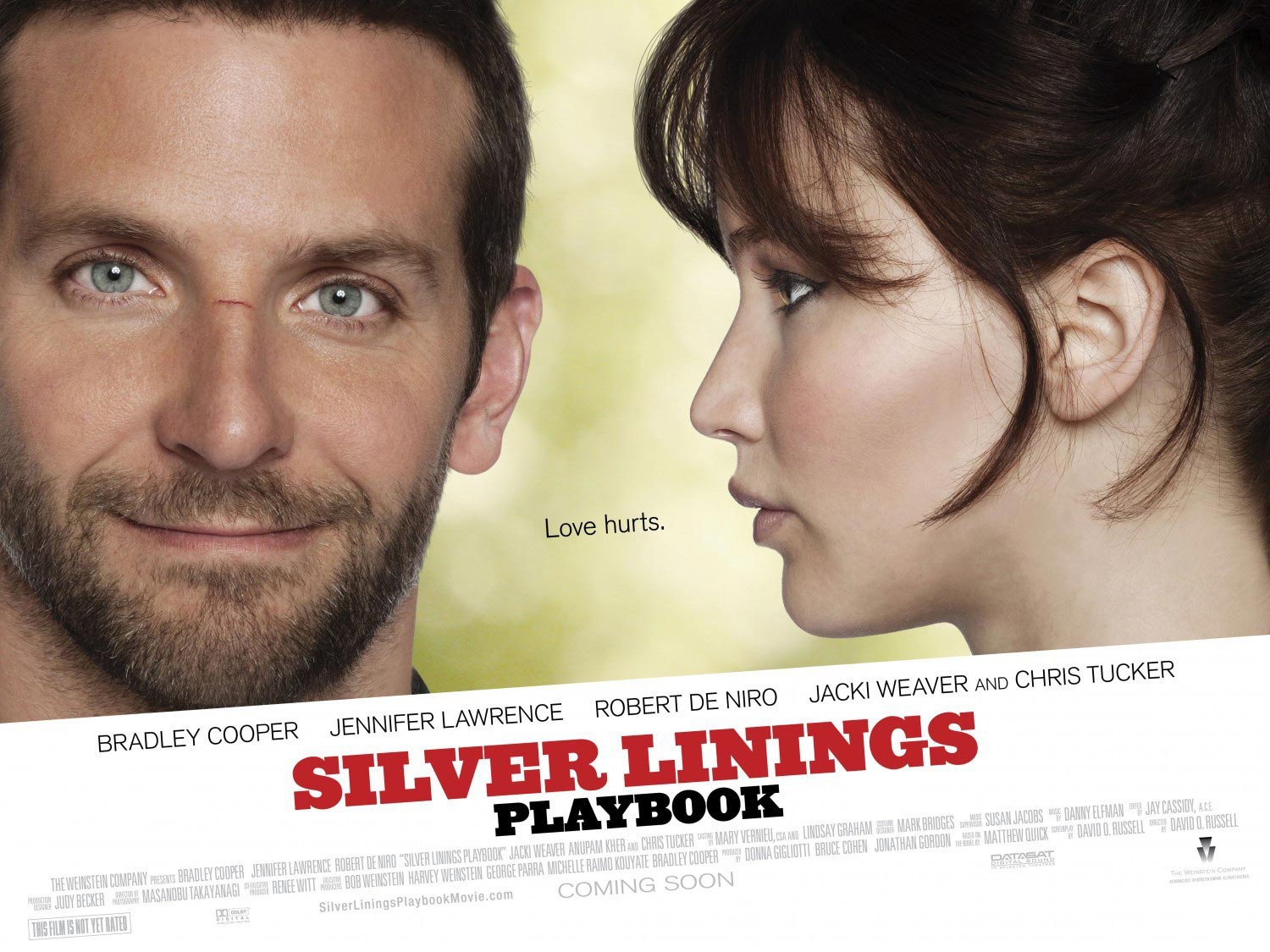
The mental illness stigma took a serious hit this year with the arrival of two movies:  Silver Linings Playbook & Mental. You'll laugh, you'll cry, you'll shake your head, and possibly even yell but one thing is certain - you'll have something new to talk about when it comes to MENTAL ILLNESS. 

You can follow the story of two lost souls looking for a silver lining as they wrestle with mental health issues. But whether the focus is on his (Bradley Cooper) bipolar disorder or her (Jennifer Lawrence) depression and post-traumatic stress issues... you get to see a brain disease from the inside-out and the outside-in.  Hold onto your seats, it's an emotional roller coaster ride.  If you've ever wonder what it feels like to have serious highs and lows (manic depression/bipolar disorder) or cognitive changes (schizophrenia) or a bit of both (schizoaffective disorder), this film takes you there with superb acting and story-telling.  Coping with an obsessive compulsive disorder or stressed out from caregiving for a relative with mental health issues is clearly revealed as a family affair.  

By the end of the movie you come to understand why it is so difficult for those with a mental illness to succeed with doing what AA requires in Step One of its 12-Step Program - COME TO ADMIT YOU HAVE A PROBLEM.  How do you do that with a "broken brain?"  How can you get to Step One when you have a disease that tells you there is nothing wrong with you?  While Silver Linings Playbook doesn't have many answers about treatment or successful recovery, it does provide insights and raise questions about the mental health system itself and the lack of a silver lining for too many.


Yet, it is noteworthy that a film about mental illness could garner Oscar nominations and an award while competing against such major films as Les Miserables.  It was 1975 when One Who Flew Over the Cuckoo Nest scored. So it's been awhile since another film on mental illness - Girl Interrupted (1999) got such Hollywood's attention. Angelina Jolie who played a diagnosed sociopath won an Oscar for best supporting actress; Winona Ryder played the author Susanna Kaysen whose 1993 memoir of the same name poignantly told about her 18-month stay in a Massachusetts' mental institution. 

It is also extraordinary that Silver Linings Playbook, a rather low-budget, sleeper of a film made history by becoming the first movie in 31 years to receive nominations in all acting categories.  The stellar cast which also includes Robert De Niro and Julia Stiles shines under the superb direction of someone who personally experiences mental illness in his family - Hollywood industry veteran David O. Russell and the excellent source material of best selling author Matthew Quick.

He certainly leaves his audience with many quotable reminders about life and mental illness:

“Most people lose the ability to see silver linings even though they are always there above us almost every day.” 

“It hurts to look at the clouds, but it also helps, like most things that cause pain.” 

“I don't want to stay in the bad place, where no one believes in silver linings or love or happy endings.” 

“Life is not a PG feel-good movie. Real life often ends badly. Literature tries to document this reality, while showing us it is still possible for us to endure nobly.” 

“I opened up to you and you judge me” 

“Haven't you ever noticed that life is like a series of movies?” 


   WHAT DOES IT MEAN TO BE MENTAL?


Have you ever felt like you didn't belong?  According to one of the characters in the new Australian movie - MENTAL:  There's no such thing as normal; there's just different shades of mental.


You can't turn away for even a moment in this movie. Not when the five daughters of a political couple are all convinced that they are suffering from some kind of undiagnosed mental illness.

The movie which is now available on DVD is fun, loud, insightful, and often... just out-of-control. It's a black comedy brought to you by the director of Muriel's Wedding  - P. J. Hogan. The writer-director of Mental uses songs from the Sound of Music and a zany hitchhiker played by Toni Colletti to demonstrate what happens to the "fun" in dysfunctional. If you can handle more than one person going "mental" at a time, then you're likely to really get the uncanny way in which P. J. Hogan challenges stereotypes about mental illness


There's nudity and profanity, so families will want to screen Mental for the appropriate age level to see it.  The dialogue however shows there is plenty to explore and discuss: what is mental illness? And, Mental tears along showing just how much needs fixing in probably all of us - souls, spirits, personalities, thoughts, beliefs, and more.  

So it's kind of a mental thing itself when Shaz, the hitchhiker, shares her theory about the "normal" and not so normal in the clip below:   As the delusionals, the borderlines, compulsives, paranoid, schizoid make up Australia as we know it. We're nothing but a living experiment in madness under constant observation by the psychiatric community of the world.


We hope you will share your comments about either or both of the above movies in the space below.  Step Forward 2 day and speak out about the need for better mental health services and attitudes. 

Sunday, October 7, 2012

Mental Illness in the News

lark voor...Is former Save by the Bell star LARK VOORHIES BiPolar?   

    Her mother claims she is, but the actress denies that she has a mental illness and calls what her mother says - "comical."  Have a listen in this TMZ interview.  It's a heartbreaker.


As an advocate for those with a mental illness, as well as their caregivers, my mission is to help remove the STIGMA and educate others about what happens when the brain works differently because of disease or injury. The more who reveal a mental illness, the more the public learns about it.  In fact, by the number of celebrities, alone, who admit to some kind of mental illness, it is readily apparent that the diagnosis is not a death sentence.  Many diagnosed with BiPolar Disorder, serious depression, and other mental illness can and do hold jobs.  When they have support via family and friends, follow treatment plans, and take prescribed medicine... they also tend to function well in society.  Who can forget some of their memorable performances in the movies and on stage.

Here is the original story about actress Lark Voorhies.


‘Saved By the Bell’ star Lark Voorhies has bipolar disorder, according to her mother

By  | Yahoo! TV – Wed, Oct 3, 2012 9:42 AM PDT


 Last spring, Lark Voorhies appeared on Yahoo!’s series “The Yo Show” (watch the episode below) to reminisce about her days on the ’90s Saturday-morning sitcom “Saved By the Bell.” She looked drastically different from how we remembered little Lisa Turtle – her hair was dyed red and she had on heavy makeup – starting rumors of all sorts. Sparked by that appearance, People magazine conducted a series of interviews with the actress, and in their new issue they report on Lark’s “sad spiral,” which the actress’ mother attributes to mental illness.
People reports that during a recent photo shoot with the 38-year-old actress, her “once-sparkling brown eyes” were “disturbingly vacant.” Lark kept a “near-constant dialogue – by turns mournful, frenetic, and angry – with unseen figures,” and struggled “to focus for even brief moments.” Although Lark denied to the magazine that she suffers from mental illness – the devout Jehovah’s Witness answered the question by saying, “Oh no. We’re alive in a major time of all-in-all prophecy” – her mother, who lives with her and was also interviewed for the story, said the former child star has been diagnosed with bipolar disorder, for which she has been prescribed medication.
“I care deeply about my daughter and I want her to resume her life,” her mother, Tricia, told People. However, she noted that finding the right treatment – and getting Lark’s cooperation in following through with it – has been “frustrating.”
While Lark herself didn’t admit to mental illness, the actress – who had to schedule a second interview with the magazine after struggling through the first one – toldPeople she has been in a constant battle with herself. “We met at a very powerful moment – it’s like carrying on the interview in a hurricane,” she said. She tried to explain away her abrupt, extended silences during the conversation by saying, “You caught me in moments of prayer. I have a strong spiritual sense.” She also talked about the voices in her head, but the magazine noted that she was “defiant about getting psychiatric help.” Explaining her reasoning, Lark said, “They can’t explain it. They can’t treat it. They don’t know about it.”
Tricia told People that her daughter’s mental health issues stem from various traumatic incidents in her life, but she wouldn’t elaborate. “I don’t want to go there,” she said. She did say that Lark’s stalled career after “Saved by the Bell” ended in 1993 caused “a lot of stress,” and her divorce from Miguel Coleman in 2001 “caused a kind of break. … The trauma was back.” These days, Lark resides with her mother; drives, but only close to home; and has few friends. Tricia says she’s not giving up hope that her daughter will pull through, noting, "She's trying so hard. She says she's delayed, but she's going to get there."


Tuesday, October 2, 2012

Untreated Mental Illness?


  Upset employee kills five and himself at Accent Signage Systems in Minneapolis after working his shift and being fired on Thursday,  September 27, 2012.

A parent's worst nightmare for a mentally ill loved one came true last month when they learned their son was involved in what police called "Minnesota's deadliest workplace shooting."  The parents told reporters they had tried in vain for nearly two years to get "Andy" to seek treatment.

The parents - Chuck and Carolyn Engeldinger - reported that "Andy" had refuse to have contact with them after they took a 12-week course to understand mental illness.  The free education classes called Family2Family (F2F) are given by the National Alliance on Mental Illness (NAMI) in states around the country.

As far at the parents knew, their son had never received a diagnosis and was not taking medicine; he had been living in his own home since 2004.

On his own and possibly without a viable support network, the 36-year-old workplace shooter apparently isolated himself and began to show signs of mental deterioration; his lateness and performance levels became such an issue that his employers warned him in writing that he needed to improve immediately.  Police say Engeldinger had worked at the sign company since the 1990s.

(credit: Bill Klotz/Finance & Commerce) (July 2012 photo of Engeldinger at work.)
     
(credit: Bill Klotz/Finance & Commerce)According to news reports, when he was told to report to Office of Operations director John Souter at the end of his shift, Engeldinger first went to his car.The shooting began after he returned, was given a final check, and terminated.  Police say he shot and killed the founder of the company - Reuven Rahamim, three employees, and a UPS driver making a delivery.  Souter, one of three injured, remains in critical condition.

In addition to delaying firings until Fridays, employers may want to take other steps to ensure safety on the job when it is necessary to terminate employees like Andy Engeldinger.  One suggestion would be to contact NAMI for short-term education courses on how to handle and recognize mental illness in the workplace.

As a NAMI certified Family2Family (F2F) teacher, I know first-hand the frustration of trying to convince relatives to seek treatment, when their very disease is telling them otherwise.  F2F teaches coping and communication skills, not how to make a mentally challenged person get help.  We can provide the latest research on drugs and treatment, offers crisis management resources, and share various ways of securing voluntary or involuntary commitment; two very big issues that often separate mental illness advocates. F2F also teaches about who is and who is not likely to commit violence.  Research shows, for example, that most mentally ill individuals are not violent. In other words, violence is more likely to come from untreated individuals, those not taking medication and/or receiving treatment for a mental illness.

Treatment works and research shows that the earlier that happens, the more successful and functional a mentally challenged person will be.  Those showing signs of schizophrenia (delusions, paranoia, cognitive deterioration) or bipolar disorder (mood changes) can also be expected to deny having a problem because denial is part of the disease itself. The disease caused by a broken brain itself is called: ANOSOGNOSIA.

According to the Treatment Advocacy Center (TAC), "Anosognosia is believed to be the single largest reason why individuals with the most severe mental illnesses do not take prescribed medications that would diminish or eliminate psychiatric symptoms. It affects an estimated 40% of those with bipolar disorder and 50% of those with schizophrenia."

Click here to read or download “The Anatomical Basis of Anosognosia.”
More information is available at www.treatmentadvocacycenter.org and www.nami.org.

Those of us who advocate for improved mental health services look forward to the day when workplace violence and other kinds of shootings by those needing serious help, will greatly diminish.

Join NAMI and others nation-wide this month in observing:

spotlight graphic

Thursday, September 6, 2012

 ADVOCATING FOR TREATMENT...              


Civil Commitment for Serious Mental Illnesses?

How do you help someone who says there is nothing wrong when behavior is psychotic?

Did you know that you can get help in Virginia but not Maryland when a psychotic person refuses treatment?


How did the Jackson family get help for Congressman Jesse Jackson, Jr. when he refused help in May 2012?

Saturday, August 18, 2012

A Teachable Moment... Mental Illness


Jesse Jackson Jr. wearing glasses


Which is it? Bipolar Depression OR Bipolar Disorder?


When it comes to Mental Illness, apparently we're not all on the same page.  Take Illinois Congressman Jesse Jackson, Jr., for example. CNN reports he is being treated for BIPOLAR DEPRESSION.  

Not true!  Contrary to what CNN and its medical advisor have reported... the evidence is lacking; there really is no such diagnosis as BIPOLAR DEPRESSION. Have you ever heard a mood disorder described as Bipolar Manic or Bipolar Manic Depression? So why Bipolar Depression? Why one end of the spectrum and not the other with a term (bi) that means two? In the Diagnostic and Statistical Manual-IV (DSM-IV) the term bipolar depression is not used. 

But let's give CNN some credit, it is beginning to explore the difference between the two terms and it does cite the Mayo Clinic as the source for it's use of the term bipolar depression. But there's even more to the story: one word (manic) was dropped out of the original statement that the Mayo Clinic issued.

The correct term or diagnosis for severe mood changes remains Bipolar Disorder. It was originally called Manic Depression years ago. After the DSM changed that label, the mood disorder then became classified as Bipolar Disorder and further differentiated into Bipolar I or Bipolar II, to indicate mild and more serious mood swings between highs and lows It is thus incorrect to use the term: bipolar depression.

CNN is not the only media outlet using the incorrect label of bipolar depression. On the same day (August 13, 2012), newspapers' headlines across the country used both terms - bipolar disorder and bipolar depression (see above examples). But... language does matter, especially, since so many of us in the health care field, are working to educate the public about mental illness. As a certified teacher, via the National Alliance on Mental Illness (NAMI), for caregivers who have relatives with mental illnesses, it helps if we're all on the same page.  

Further, I press the case because the term Bipolar refers to two poles or opposite ends of a continuum; it is thus not correct to say Bipolar Depression. Why not just say severe depression and drop the bipolar reference? Moreover, it should be noted that treatment takes time.  It's not unusual for it to take months to find the right medicines to treat a Bipolar Disorder. We are, after all, talking about chemical changes in the brain. 

So when Representative Jesse Jackson, Jr. leaves the Mayo Clinic, it is important to remember that his treatment is not done. Instead of in-patient care, he moves to out-patient care where he will definitely need a strong support network of family and friends, as well as, medicine.

There is every reason to expect the congressman to be functional and able to do the job he was elected to do, in time, and... as long as he follows the specified treatment plan of medicine and therapy.  But it does take time for stabilization. Many persons with a Bipolar Disorder diagnosis are highly functional and able to hold full-time jobs successfully. 

Without medicine, however, the side effects of  Bipolar Disorder can include: impaired judgment and/or impulsiveness, an inability to concentrate, fatigue or loss of energy, an impaired reality, and memory problems. And we should remember that we're not talking about regular depression here or feeling down a few days or weeks out of a month.

A clinically depressed or "deeply" or "severely" depressed person has behavior that differs dramatically from regular depression.  It is thus imperative that the Cable News Network, it's medical advisor, web sites about mental illness, and others cease using the incorrect term of bipolar depression; doesn't exist. Since so many of us still get our news from television, I propose that at a minimum the media should explain the diagnostic terms used for mental health issues.

To do so is to help de-stigmatize mental illness. Interestingly, my preliminary research indicated how the incorrect term came to be used in the first place. 

Although the Mayo Clinic's original statement said Rep. Jesse Jackson, Jr. was diagnosed with Bipolar II Depression, someone in the media, ended up dropping the reference to "II," and suddenly Jesse Jackson, Jr. had bipolar depression.

And that is why... we had conflicting headlines like these all on the same day.


Jesse Jackson Jr. Bipolar: Mayo Clinic Releases Statement Detailing Diagnosis

August 13, 2012.  According to Huffington Post Chicago:
The Rochester, Minn.-based clinic specified his condition as Bipolar II, which is defined as periodic episodes of depression and hypomania, a less serious form of mania.

Rep. Jackson being treated for bipolar depression, clinic says


August 13, 2012.  |By the CNN Wire Staff   According to CNN, U.S. Rep. Jesse Jackson Jr. is responding well to treatment for bipolar depression, the Mayo Clinic said Monday. The Rochester, Minn.-based clinic said Jackson is regaining his strength but offered no further information on his condition. 

August 13, 2012 6:11 PM

Jesse Jackson Jr. says he has "bipolar II depression": What is bipolar II?

(CBS News)   By  Ryan Jaslow      U.S. Congressman Jesse Jackson Jr. is being treated for bipolar II disorder at the Mayo Clinic in Rochester, Minn., the hospital said Monday in a statement.

"Following extensive evaluation, Congressman Jesse Jackson, Jr. is undergoing treatment for Bipolar II depression," the statement read. "Congressman Jackson is responding well to the treatment and regaining his strength."

Jesse Jackson Jr. undergoing treatment for bipolar disorder
 at 02:56 PM ET, 08/13/2012
Illinois Democratic Rep. Jesse Jackson Jr. is undergoing treatment for bipolar II depression, according to a statement issued this afternoon from the Mayo Clinic.“Bipolar II disorder is a treatable condition that affects parts of the brain controlling emotion, thought and drive and is most likely caused by a complex set of genetic and environmental factors,” the clinic wrote.


###
Advocates:  Talk Back! Talk about Mental Illness!  

Share your stories below!


Mental Illness is a family affair!

Mental Illness is a community affair!